Showing posts with label Vasco da Gama. Show all posts

Wednesday, June 17, 2009

ABC WEDNESDAY - # 23 (V)

Photo by Brian McMorrow (downloaded from [HERE]) of the Tomb of [Vasco da Gama] at the Monastery of Jeronimos (Belém, Lisbon). Vasco da Gama was one of the greatest Portuguese explorers, and one of the most successful in the World since the Age of the Discoveries. He was also the commander of the first ships to sail directly from Europe to India. Please check the label «Vasco da Gama» to view more posts about this great heroe.
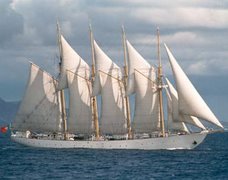
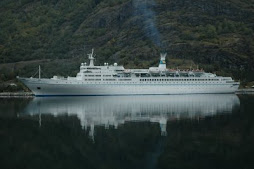
«V» is also for «VASCO DA GAMA», former «INFANTE DOM HENRIQUE», the first ship I cruised on, back in 1972. A contribution to ABC Wednesday.

Tuesday, May 20, 2008

HONOURS MUST BE MADE TO «VASCO DA GAMA»!!!

Admiral Dom Vasco da Gama, Knight Commander of the Military Order of Christ, with the Tower of Belém behind
(Oil on canvas. Downloaded from the internet)
This post refers to today's cellebration of the First European Maritime Day ever. From now on, the European Maritime Day will be celebrated on 20 May each year. This year's events will include a stakeholder conference in Brussels 19-20 May, which will focus on the regional approach to the implementation of Maritime Policy, and dialogue with stakeholders. The European Maritime Day will be an occasion to highlight the crucial role played by the Oceans and Seas and will contribute to a better visibility of the maritime sectors and more recognition of the importance they play in everyday life. You may read the Official Declaration [HERE] and the Press Release also [HERE].
But WHY on the 20th of May? As you may see, there is not a single justification for the choice of this particular date. Well, the choice may be based on the fact that on May 20, 1498, the Portuguese Fleet commanded by ADMIRAL VASCO DA GAMA (Count of Vidigueira, a fabulous Portuguese explorer and navigator and one of the most successful in the European Age of Discovery) arrived at Calicut (India), thus being the leader of the first ships to sail directly from Europe to India. This was an extremelly important journey, having opened direct sea route to Asia which helped to bring about an era of European domination through sea power and commerce that lasted several hundred years, as well as 450 years of Portuguese presence in India, Asia, and Africa.
I sincerely hope Vasco da Gama and all of his officers and sailors will be honoured today. Otherwise I really do not understand the reason why we have to endure with so many painful European Laws, Rules, Decisions, Impositions, Bureacracy measures and extremelly boring people who are neither humble, nor tolerate or friendly (with the usual exceptions made to some few nice people, of course) and to whom I dedicate the first song today at Rádio Atlântico Azul, «Didi».
Em 20 de Maio de 1498, Vasco da Gama chega a Calecute, no final da viagem de descoberta do caminho marítimo para a Índia. 510 anos depois, no mesmo dia, o Parlamento Europeu reúne-se numa sessão plenária que assinala o primeiro Dia Europeu do Mar. Coincidência? A criação do Dia Europeu do Mar partiu de uma proposta da Comissão liderada por Durão Barroso, acolhida pelo PE e pelo Conselho da União Europeia. Reproduzo de seguida a notícia veiculada pela Agência LUSA em 15 de Maio de 2008:

«A União Europeia vai declarar 20 de Maio Dia Europeu do Mar, celebrando as realizações e o potencial dos oceanos e mares europeus, data que coincide com a chegada de Vasco da Gama à Índia, em 1498. O presidente da Comissão Europeia, José Manuel Durão Barroso, sublinhou hoje que "o mar, os sectores marítimos e os recursos marinhos são essenciais para a prosperidade e o bem-estar da Europa". "Ao criar o Dia Europeu do Mar, nós, europeus, queremos celebrar esta realidade e promover a consciência das possibilidades oferecidas pelo mar e pela nova política marítima integrada", adiantou. A cerimónia oficial decorrorá em Estrasburgo, França, na próxima terça-feira, durante a sessão plenária do Parlamento Europeu (PE), com a participação de Durão Barroso, Janez Janza (primeiro-ministro esloveno e presidente em exercício do Conselho da UE) e Hans-Gert Poettering (PE). Para marcar a primeira celebração do Dia Europeu do Mar, o PE votará um relatório sobre política marítima integrada da UE. O relatório sublinha, nomeadamente, a dimensão marítima excepcional que o extenso litoral, as ilhas e as regiões ultraperiféricas, como os Açores e a Madeira, conferem à UE. O documento realça igualmente as possibilidades únicas oferecidas pelo sector marítimo em matéria de inovação, investigação, ambiente e biodiversidade, apelando para que estas sejam plenamente tidas em conta na política marítima integrada emergente. Paralelamente, a Comissão Europeia realizará uma conferência sobre o tema em Bruxelas, em 19 e 20 de Maio, incluindo um painel de governantes de Estados-membros da UE, incluindo o secretário de Estado dos Assuntos do Mar, João Mira Gomes. A proposta relativa a uma política marítima integrada foi apresentada pela Comissão Europeia em Outubro de 2007 e adoptada pelos chefes de Estado e de Governo no Conselho Europeu de 14 de Dezembro de 2007. Bruxelas apresentou entretanto propostas destinadas a combater a pesca ilegal, favorecer o desenvolvimento dos portos da UE e das cidades portuárias, reapreciar o enquadramento social que regulamenta as profissões marítimas e promover uma maior compatibilidade entre a política energética e a política marítima.»

Porém, e como podem constatar [AQUI] e [AQUI], nem uma única referência à chegada de Vasco da Gama à India em 20 de Maio de 1498. Aceita-se comentários justificativos. Já agora, se souberem explicar por que razão Portugal nunca venceu o Festival Europeu da Canção e por que razão aderimos à CEE sem Referendo, informem-me.

The seaway to India, discovered by Vasco da Gama, on stamps

(Images and text © Bjoern Moritz, all rights reserved).

1431/32: Gonçalo Velho Cabral discovered the island of Azores. 1482: Diogo Cão reached the river Congo. 1487: Bartolomeu Dias rounded the Cape of Good Hope, until then the Cape of Storms, sailed for 400 miles to the east, but a mutiny forced him to return. 8th July, 1497: Vasco da Gama started his historic voyage with a fleet of four ships.
20th May, 1498: Vasco da Gama reached Calicut (India).

«The Fleet: Vasco da Gama's ship was the «São Gabriel», of 178 tons, 27 meters long, breadth of 8.5 meters, draught of 2.3 meters, sails with 372 squaremeters, and a crew of 150 people. «São Raphael» had nearly the same size, the caravel «Berrio» was a little smaller. These three ships were accompanied by a small supply ship for stores and food. During the voyage many seamen died of scurvy. On November 22th, 1497 the fleet passed the Cape of Good Hope and reached Mosselbay. Here Vasco da Gama ordered a stop for a complex overhaul of the ships. Along the eastcoast of Africa they sailed to Mombassa and Malinde. During this part the «São Raphael» run ashore, but at Malinde they were able to hire a pilot. On May 20th, 1498 the fleet reached the indian port of Calicut. The task was done. The seaway to India was discovered (the merchant trade from Europe to Arabia was in use a long time before in that region).

Vasco da Gama had severe problems selling his articles. After long discussions and negotiations he forced the Indians to supply the needed spice by taking some hostages. On October 8th, 1498 he started homebound with two ships
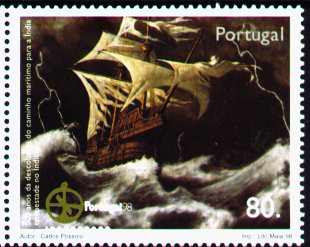
The homebound voyage was terrible. The crew had to fight with scurvy and heavy storms again. After rounding the Cape of Good Hope the two ships became seperated. The «Berrioh» reached Lisboa in July of 1499. The damaged «São Gabriel» limped to the Cape Verde Islands, where Vasco da Gama chartered a caravel and returned via the Azores to Lisboa. The trade company of Lisboa sold the spice with high profit and the voyage became a great financial success.

The second Portuguese India expedition led Pedro Álvares Cabral, who discovered Brazil on this occasion in the year 1500. In 1501 Joao da Nova was the commander of the third voyage with four ships. The fourth voyage 1502 was again under the command of Vasco da Gama, after he had protested at king Manuel I against a renewed appointment Cabrals to the commander in chief of the fleet. This time he started the voyage with 21 heavily armed ships.

The appearance of the Portuguese in the Indian ocean and their attack on the trade monopoly of Arab and Indian dealers led quite fast to a latent state of war. 1502 immediately after his arrival in Indian seas before Calicut, Vasco had to fight a sea battle with 15 own ships against a fleet of more than 100 Indian and Arab, mostly smaller ships. The Portuguese could destroy the opposing fleet nearly completely. And the Portuguese had success to break the resitance against them by negotiations, using rivalries under the Indian princes and inconsiderate use of force.

Vasco Gama strengthened Portugal position at the Indian Malabar coast. 1503 or 1504 he returned to Portugal. From now on he lived ashore. But in the course of time mismanagement and corruption spread in India. 1524 Vasco Gama was appointed to a vice king of India and sent again there. He had to do many preventive measures and to reorganize the civil administration and the military structure. Thus he exchanged nearly all commanders of the Portuguese attachments in India. But Vasco Gama became ill. He died only three months after his arrival at 24th December 1524 at Cochin.»
Information and stamps downloaded from [HERE].

Beautiful Photo of Vasco da Gama's tomb taken by James Martin at the Monastery of Jeronimos (Belém, Lisbon). Vasco da Gama is praying to God to always protect Portugal.